
Proposed Tax Changes for Tax Year 2025
The closest things to “magic words” when it comes to taxes are deductions and credits. Both help you keep more money in your pocket instead of Uncle Sam’s, but they do so in slightly different ways!
Tax deductions help lower how much of your income is subject to federal income taxes. Some deductions are only available if you choose to itemize your deductions, while others are still available even if you decide to take the standard deduction.
Meanwhile, tax credits lower your actual tax bill dollar for dollar, and there are two types of credits: refundable and nonrefundable. If a credit is greater than the amount you owe and it’s a refundable credit, the difference is paid to you as a refund. Score! But if it’s a nonrefundable credit, your tax bill will be deduced to zero, but you won’t get a refund. That’s still great! Here are some deductions and credits you might be able to claim on your 2025 tax return:
2025 Tax Updates
Filing Status:
There are five filing statuses:
SINGLE
A tax-payer is single if unmarried or separated from a spouse, either by divorce or a separate maintenance decree, on December 31. A widow(er) whose spouse died before 2025 is single unless he meets the test for qualifying widow(er).
MARRIED FILING JOINT (MFJ)
Taxpayers may file jointly if on the last day of the year they are:
- Married and living together,
- Married and living apart, but not legally separated or divorced,
- Separated under an interlocutory (not final) divorce decree, or
- Living in a common-law marriage, if common-law marriage is recognized in the state where they currently reside or in the state where the marriage began.
If one spouse died in 2025 , the survivor can file jointly with the decedent if the couple met one of the above tests on the date of death and the survivor did not remarry in 2025 .
Same-sex marriages.
For federal tax purposes, the term spouse includes an individual married to a person of the same sex if the couple is lawfully married under state (or foreign) law, even if the state (or foreign country) in which they now live does not recognize same-sex marriage. However, individuals who have entered into a registered domestic partnership, civil union or other similar relationship that is not considered a marriage under state (or foreign) law are not considered married for federal tax purposes.
MARRIED FILING SEPARATELY (MFS)
- Married individuals who choose to file separate tax returns instead of a joint return. You may file as Married Filing Separately if:
You were legally married as of December 31 of the tax year, and - You and your spouse choose to file separate returns
HEAD OF HOUSEHOLD (HOH)
To qualify as Head of Household the tax payer must meet all of these test:
- The taxpayer is not married at the end of the year ( exception: Married taxpayers can qualify as HOH but meeting the test for considered unmarried.
- The taxpayer paid more than half the costs of keeping up his home.
- The taxpayer is a U.S. Citizen or resident during the entire year.
- The home was the principal residence for more than half the year for either of the following:
- The taxpayer’s qualifying child
- The taxpayer’s qualifying relative who is the taxpayer’s dependent
QUALIFYING WIDOW(ER) (QW)
This is a special tax filing status available for two years following the year a spouse dies, provided specific conditions are met. You may file as a Qualifying Widow(er) if:
- Your spouse died within the last two tax years
- You have not remarried
- You have a dependent child who lived with you all year
- You paid more than half the cost of maintaining your home
- You were eligible to file Married Filing Jointly in the year your spouse died
Standard Deduction
The standard deduction for a married filing jointly/surviving spouses is $32,200, married filing separately is $16,100, head of household is $24,150 and single is $16,100. Additional dependents are $500. If you are over 65 you will receive an additional $1300 added to your deduction.
For tax year 2025, the IRS increased the standard deduction amounts as part of recent tax law changes:
-
Single / Married Filing Separately: $15,750
-
Married Filing Jointly / Qualifying Widow(er): $31,500
-
Head of Household: $23,625
These are higher than prior amounts and will reduce taxable income for most filers.
Income Tax Brackets
Additional Deductions for Seniors
-
Taxpayers 65 or older may claim an extra $6,000 bonus deduction (in addition to the standard additional age/blind deduction), phased out at higher incomes.
Filing Status:Single
| IF TAXABLE INCOME IS: | THE TAX IS: |
|---|---|
| $0 to $11,925 | 10% of taxable income |
| $11,925 to $48,475 | $1,192.50 + 12% of the amount over $11,925 |
| $48,475 to $103,350 | $5,578.50 + 22% of the amount over $48,475 |
| $103,350 to $197,300 | $17,651 + 24% of the amount over $103,350 |
| $197,300 to $250,525 | $40,199 + 32% of the amount over $197,300 |
| $250,525 to $626,350 | $57,231 + 35% of the amount over $250,525 |
| Over $626,350 | $188,769.75+ 37% of the amount over $626,350 |
Filing Status:Head of Household
| IF TAXABLE INCOME IS: | THE TAX IS: |
|---|---|
| $0 to $17,000 | 10% of taxable income |
| $17,000 to $64,850 | $1,700 + 12% of the amount over $17,00 |
| $64,850 to $103,350 | $7,442 + 22% of the amount over $64,850 |
| $103,350 to $197,300 | $15,912 + 24% of the amount over $103,350 |
| $197,300 to $250,500 | $38,460 + 32% of the amount over $197,300 |
| $250,500 to $626,350 | $55,484 + 35% of the amount over $250,500 |
| Over $626,350 | $187,031,50 + 37% of the amount over $626,350 |
Filing Status:Married Filing Jointly
| IF TAXABLE INCOME IS: | THE TAX IS: |
|---|---|
| $0 to $23,850 | 10% of taxable income |
| $23,850 to $96,950 | $2,385 + 12% of the amount over $23,850 |
| $96,950 to $206,700 | $11,157 + 22% of the amount over $96,950 |
| $206,700 to $394,600 | $35,302+ 24% of the amount over $206,700 |
| $394,600 to $501,050 | $80,398 + 32% of the amount over $394,600 |
| $501,050 to $751,600 | $114,462 + 35% of the amount over $501,050 |
| Over $751,600 | $202,154.50 + 37 % of the amount over $751,600 |
Filing Status:Married Filing Separately
| IF TAXABLE INCOME IS: | THE TAX IS: |
|---|---|
| Not over $11,925 | 10% of taxable income |
| $11,925 to $48,475 | $1,192.50+ 12% of the amount over $11,925 |
| $48,475 to $103,350 | $5,578.50 + 22% of the amount over $48,475 |
| $103,350 to $197,300 | $17,651 + 24% of the amount over $103,350 |
| $197,300 to $250,525 | $40,199 + 32% of the amount over $197,300 |
| $250,525 to $375,800 | $57,231 + 35% of the amount over $250,525 |
| Over $375,800 | $101,077.25 + 37% of the amount over $375,800 |
Standard Mileage Rate
- Business – 70 cents per mile
- Charitable – 14 cents per mile
- Medical Care or Move (Military Only) – 21 cents per mile
Child and Dependent Care Credit
In the tax year 2025 , depending on income, you can get a credit worth up to 35% of your qualifying childcare expenses (minimum of 20%). The maximum eligible expense for this credit is $3,000 for one qualifying person and $6,000 for two or more. This is no longer a refundable credit. You can check here to see if you qualify for the Child and Dependent Care Credit.
Student Loan Interest Deduction:
Taxpayers can deduct up to $2500 of interest paid on qualified education loans for college or vocational school expenses as an adjustment to income (above-the-line) (IRC 221).The deduction is available for interest on qualifying loans for the benefit of the taxpayer or the taxpayer’s spouse or dependent at the time that the debt was incurred. Read more at the IRS.
American Opportunity Credit (AOTC) and Student Loan Interest Deduction – Max credit each is $2,500.
Lifetime Learning Credit (LLC) – Max credit is $2,000.
Earned Income Tax Credit
EITC, in 2021, had a refundable credit for low and moderate income workers, but this relief has ended. For the tax year 2025 , if you are single with no children and earned less than $16,480 you can get a maximum credit of $632. You can check here to see if you qualify for the Earned Income Tax Credit. Check out the EITC tables for tax year 2025.
Once again, the IRS will be holding the Earned Income Credit Returns until mid-February before they are released.
Child Tax Credit
he Child Tax Credit was permanently increased beginning with the 2025 tax year:
-
Up to $2,200 per qualifying child under age 17
-
Must meet residency, age, dependency, and SSN requirements
This brings greater refundable credit benefits for many families.
Charitable Deductions
To be able to claim qualified charitable donations for tax year 2025 , you must itemize your deductions.
Itemized Deduction Requirement
-
You can deduct charitable contributions only if you itemize your deductions on Schedule A (Form 1040).
-
Contributions to qualified organizations (such as 501(c)(3) charities) may be deductible.
-
Gifts to individuals or payments for goods/services (e.g., charity event tickets) are not fully deductible; you may deduct only the amount exceeding the fair market value of any benefit received. IRS
Qualified Organizations
-
Donations must be made to IRS-recognized qualified charitable organizations (use IRS Tax Exempt Organization Search to verify). IRS
AGI Limits (2025)
-
Generally, cash donations to public charities are deductible up to 60% of your adjusted gross income (AGI) if you itemize.
-
Other types of contributions (e.g., certain property gifts) may be limited to 20% or 30% of AGI depending on the type of gift and organization. IRS
Deadline
-
To qualify for the 2025 tax year, donations must be made by December 31, 2025.
Retirement Income
The CARES Act itself has expired, it may still affect your 2020 or 2021 Amended Returns.
Summary of 2025 IRS Retirement Income Changes & Key Rules
| Topic | 2025 Rule / Change |
|---|---|
| RMD Starting Age | Age 73 (raised from 72 under SECURE 2.0) |
| RMD Deadlines | First by April 1 following age 73; subsequent by Dec 31 |
| RMD Penalties | 25% of amount not taken (can reduce to 10% if timely corrected) |
| RMD for Roth 401(k) | No lifetime RMD requirement for account owner |
| Contribution Limits | 401(k), 403(b), 457 elective deferrals: $23,500; catch-up limits apply |
| Inherited IRA Distributions | Annual RMDs and 10-year distribution rules for most beneficiaries |
The individual 401(k) contribution limit, for tax year 2025 , increased to $23,500. Anyone over the age of 50 can contribute an additional $7,500. For tax year 2025, the total contribution limit (this includes any employer contributions) is $70,000 and if your are over 50 it is $77,500 and up to roughly$81,250 with the age 60-63 super catch-up.
For SIMPLE IRAs, contributions for 2025 are $16,500 and if you are over 50 you can contribute an additional $7,500.
If you have an IRA you can continue contributing into it for the tax year 2025 up until April 15, 2025 .
The IRS has increased the income threshold for the Saver’s cred for 2025 for single filers up to $1,000 and $2,000 for married filing join filers as long as you contribute to a retirement account and meet the AGI requirements. For tax year 2025, the AGI must not be over $39,500 for single, $79,000 for married filing joint, and $39,500 for head-of-household filers.
Tax Brackets
2025 Federal Income Tax Brackets (Ordinary Income)
Single Filers
| Tax Rate | Taxable Income Range |
|---|---|
| 10% | $0 – $11,925 |
| 12% | $11,926 – $48,475 |
| 22% | $48,476 – $103,350 |
| 24% | $103,351 – $197,300 |
| 32% | $197,301 – $250,525 |
| 35% | $250,526 – $626,350 |
| 37% | $626,351+ |
Married Filing Jointly
| Tax Rate | Taxable Income Range |
|---|---|
| 10% | $0 – $23,850 |
| 12% | $23,851 – $96,950 |
| 22% | $96,951 – $206,700 |
| 24% | $206,701 – $394,600 |
| 32% | $394,601 – $501,050 |
| 35% | $501,051 – $751,600 |
| 37% | $751,601+ |
Head of Household
| Tax Rate | Taxable Income Range |
|---|---|
| 10% | $0 – $17,000 |
| 12% | $17,001 – $64,850 |
| 22% | $64,851 – $103,350 |
| 24% | $103,351 – $197,300 |
| 32% | $197,301 – $250,500 |
| 35% | $250,501 – $626,350 |
| 37% | $626,351+ |
Married Filing Separately
| Tax Rate | Taxable Income Range |
|---|---|
| 10% | $0 – $11,925 |
| 12% | $11,926 – $48,475 |
| 22% | $48,476 – $103,350 |
| 24% | $103,351 – $197,300 |
| 32% | $197,301 – $250,525 |
| 35% | $250,526 – $375,800 |
| 37% | $375,801+ |
Notes on How It Works
-
The U.S. uses a progressive tax system: different portions of your income are taxed at different rates as income rises through the brackets. IRS
-
Rates did not change from previous years, but thresholds were adjusted for inflation for 2025.
REPORTING CRYPTO AND NFT TRANSACTIONS
For tax year, 2025 , the IRS is cracking down on tacking cryptocurrency trades and sales. When there’s a trade, sell or item purchased with cryptocurrency it triggers a taxable event which is reported to the IRS. Since cryptocurrency is taxed just like property, it makes it subject to short-term or long-term capital gain taxes which are reportable to the IRS, which also means any cryptocurrency losses are to be reported which can help offset any gains. The IRS will flag any gains you have, but if you don’t report any losses you have that can help lower your tax burden, the IRS will not adjust your return on your behalf.
If you traded or sold cryptocurrency at a loss, you can report your capital loss and help to reduce any tax liability. The same goes for NFTs.
THIRD-PARTY APPS REPORTING PAYMENTS TO THE IRS
The self-employed and freelancers have always been required to report their earnings to the IRS. Under the new law, which took effect January 1, 2025 , third-party apps, such as Cash App, Zelle, Venmo, PayPal and others, are required to report to the IRS any transactions paid in 2025 that exceeds a minimum threshold of $20,000 in aggregate payments or 200 transactions.
You still need to report any earnings as usual since the IRS will be able to verify the amounts you report against the transactions in third-party apps. Each third-party app will be issuing you a 1099-K form which should make reporting your income a lot easier.
Any money you have gifted to your children is safe from taxes. Only your earnings sent through the third-party apps are subject to being reported and taxed.
The third-party apps will need to confirm you tax information (employer identification number (EIN), individual tax identification number or your Social Security number. Most business owners have an EIN, but if you are a sole proprietor or individual freelancer or even a gig worker you will need to provide an ITIN or social security number.
TYPES OF INCOME REPORTING FORMS
- 1099-K: Reports nonemployment income for anyone who uses online platforms, third-party apps or payment card processors for payments made for goods or services. It only reports on the “gross” amounts and not “net” transactions.
- 1099-INT: Reports most payments of interest income
- 1099-MISC: Documents the earned income you made as an independent contractor via direct deposit, check, or cash.
- 1099-R: Income that comes from an IRA distribution or a pension
TAX REFUNDS
If you were one of the thousands of taxpayers whose refund was held up, then you probably received interest on your refund amount. That amount is taxable interest and must be reported. The IRS will send you a 1099INT sometime in mid to late January to advise you of the amount you need to report.
HEALTH SAVINGS ACCOUNT
These accounts allow you to put away pretax or tax-deductible money and have it grow free of taxes. You can take a tax-free withdrawal to cover qualified health expenses. This year, you can save up to $4,300 if you’re an individual with self-only health coverage, Family HDHP coverage is $8,550 and Catch-up (Age 55+) is an additional $1,000 if not enrolled in Medicare.
NEW CREDIT – QUALIFIED BUSINESS INCOME
There is a new credit called QBI (Qualified Business Income) for each trade, business or farm that is showing a profit from their business activity. The credit is calculated by percentage of the amount of net income. The credit is subject to phase-outs and limitations based on total income.
MOVING EXPENSE DEDUCTIONS:
Only military changing duty stations may deduct moving expenses.
ALIMONY DEDUCTION:
Starting after 2018, the deduction for alimony paid is no longer deductible to the payer or reportable by the recipient. Before 2018 the law is the same, however the date of divorce must be included.
EDUCATION CREDITS:
The Education Credits , Lifetime and American Opportunity and Tuition & Fees Deduction are still in effect with certain phase out levels.
TAX DEADLINE
Tax Day is Tuesday, April 15, 2025 . You must file your 2025 tax returns by this date! Did you have a wild year in 2025 ? In that case, working with a tax pro is a smart move.
HELPFUL HINTS
If you are having your return done professionally you will need to bring your prior year return, photo id and social security cards for everyone on the return.
CHECK YOUR TAX PREPARER’S QUALIFICATIONS:
All paid tax preparers are required to have a Preparer Tax Identification Number or PTIN. Paid preparers must sign return and include their PTIN as required by law. The preparer must also give you a copy of the return.
IDENTITY PROTECTION:
If you want to make sure your identity is protected, you may apply for an Identity Protection Personal Identification Number that will be used to protect your return.
W-4 INFORMATION:
Each Employee needs to fill out a new W-4 with their employer for 2025 .
SOCIAL SECURITY 2025 CHANGES
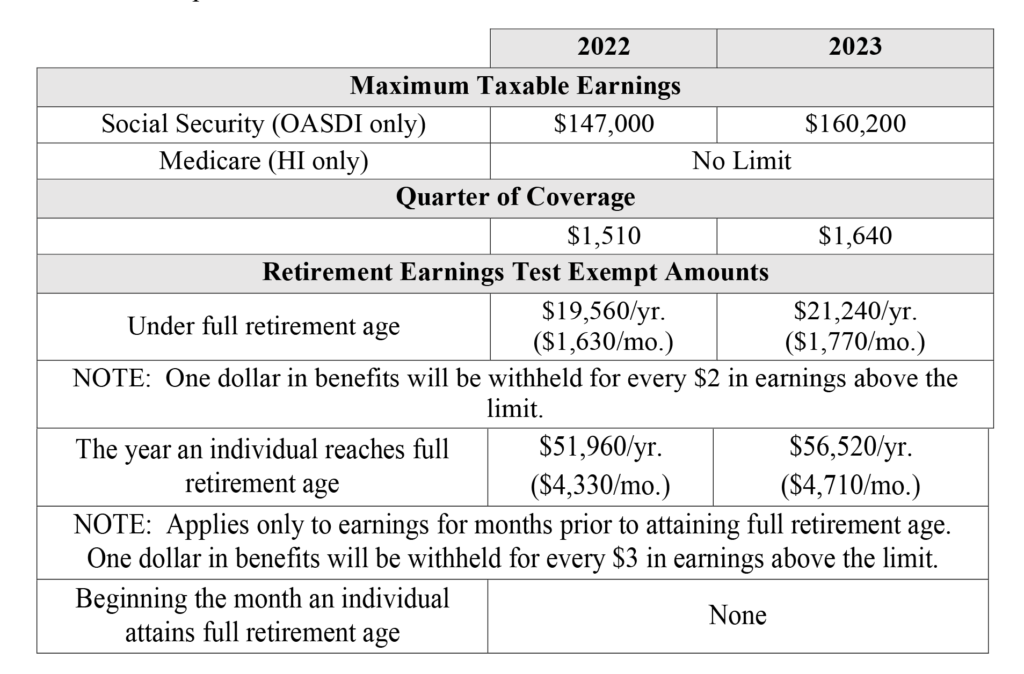
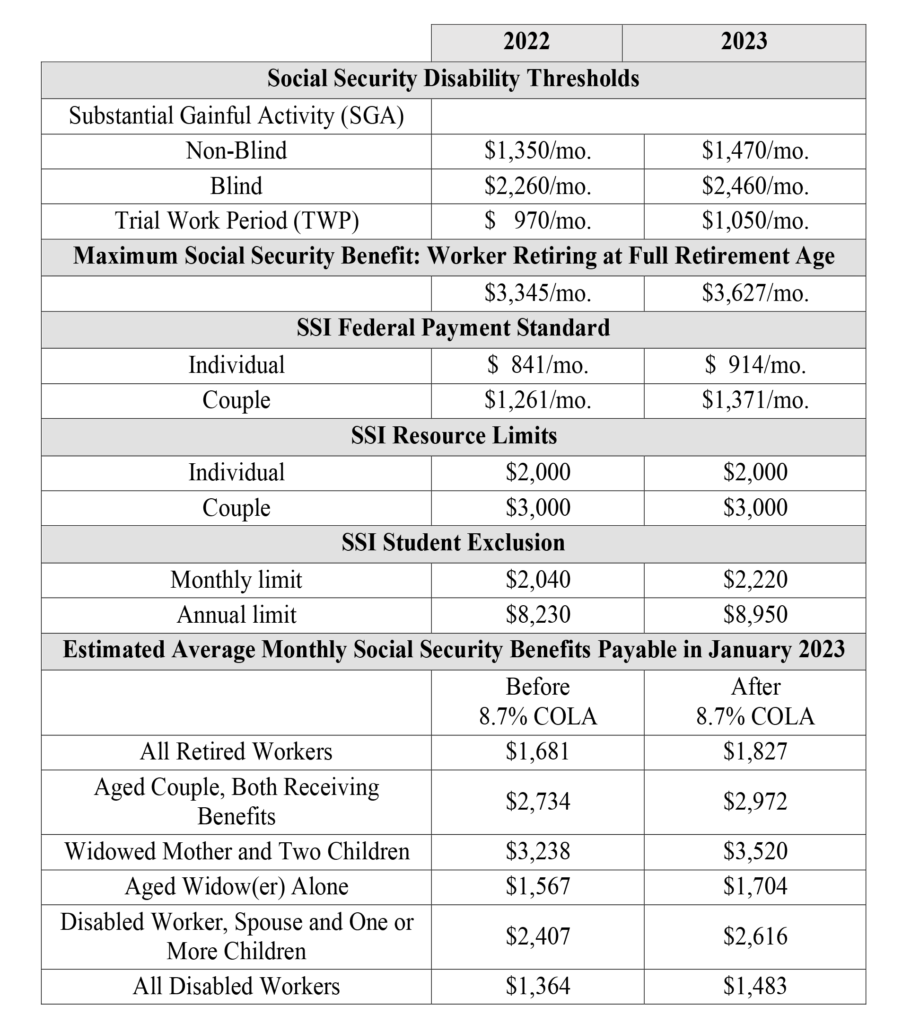
In 2025 Social Security and Supplemental Security Income (SSI) will receive an 2.5% COLA increase. The Tax Rate for an employee in 2025 is 7.65% and for Self-Employed is 15.30%. The 7.65% tax rate is a combination for Social Security and Medicare. The Social Security portion (OASDI) is 6.20% on earnings up to the applicable taxable maximum amount (see below). The Medicare portion (HI) is 1.45% on all earnings. Also, as of January 2013, individuals with earned income of more than $200,000 ($250,000 for married couples filing jointly) pay an additional 0.9 percent in Medicare taxes. The tax rates shown above do not include the 0.9 percent.4
Please note: This is only a short list of some of the new tax rules for 2025 . Please spend time with your tax preparer and learn the rules at IRS.GOV so you and your advisor are knowledgeable about qualifying expenses, eligible purchases, contributions, gifts, etc., so you can reduce your tax burden.
What is the 1099-K reporting threshold for 2025 ?
This means that for the tax year 2025 , payment apps and online marketplaces will only be required to send Forms 1099-K to taxpayers who receive over $20,000 and have over 200 transactions.
Why is LLC gaining popularity?
Another reason that a single member, member managed LLC is so popular is that it is
the easiest business form to maintain. It does not require the same formality of
conducting annual meetings and maintaining annual minutes, like a corporation
requires.
What are 3 disadvantages of an LLC?
The Disadvantages of the LLC Business Structure:
- A major disadvantage of an LLC is that owners may pay more taxes….
- It can be harder to attract investors with an LLC structure….
- There tend to be high filing and renewal fees associated with forming and
maintaining an LLC.
What is the Boi rule for FinCEN?
This Access Rule follows the final BOI Reporting Rule FinCEN issued on September 30,
2022, which requires certain corporations, limited liability companies, and other similar entities created in or registered to do business in the United States to report to FinCEN information about themselves, their beneficial owners.
Who is exempt from beneficial ownership rule?
Subsidiaries of certain exempt entities, including larger operating companies, public companies, regulated entities such as banks (but not MSBs), and the exempt private equity and venture capital entities, are also exempt from BOI reporting, provided in each case that the subsidiary’s ownership interests are controlled.
Who must file beneficial ownership report?
The beneficial ownership rule applies to two types of businesses: Domestic reporting companies – These are corporations, limited liability companies (LLCs) and other entities created by filing with a secretary of state or similar office under the law of a state or Indian tribe.
What is the purpose of BOI reporting?
BOI reporting is a new requirement created by the Corporate Transparency Act (“CTA”), which became law in 2021. BOI reporting aims to provide the government with resources to crack down on anonymous shell companies used by money launderers
and criminals.